
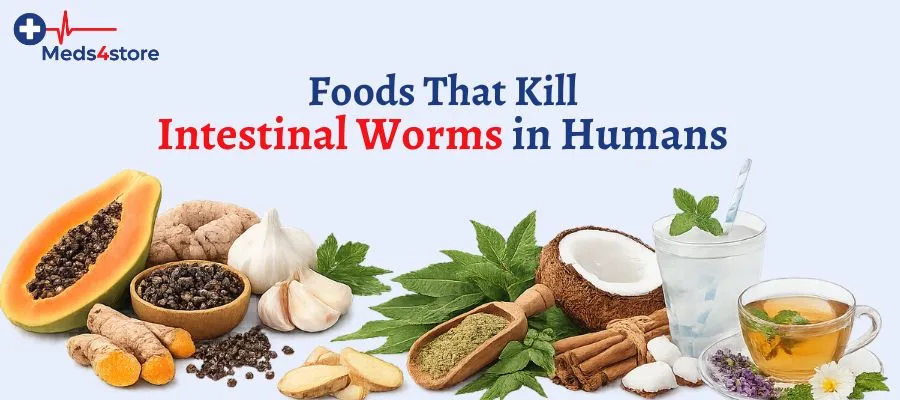
Foods That Kill Intestinal Worms in Humans

Most people underestimate how prevalent intestinal parasites are. For example, people living in less developed countries contract parasitic worm infections in the millions. Medicines are the most effective means of treating parasitic infections, though some foods can aid the body’s ability to fight infections naturally.
This article will examine the nature of intestinal worms, how people get infected, symptoms of infections, foods to eat to aid in treatment, and how to treat infections with the help of modern medicine.
What Are Intestinal Worms?
Intestinal worms, or helminths, are worms that are considered parasites because they rely on the host to survive, and are, therefore, harmful to the host. They can, and often do, cause the host to suffer from digestive discomfort and malnutrition because they are feeding off the host’s nutrients.
Intestinal worms fall into the following categories:
- Roundworms
- Hookworms
- Tapeworms
- Whipworms
- Pinworms
Some infections are worse than others. For example, infections can result in anemia and extreme fatigue, children are especially susceptible to complications that stunt their development.
How Do You Get Intestinal Worms?
Most commonly, parasitic worms are transmitted through food and drink. Contaminated foods can result in infection, and contaminated water can also cause infections. There are four main ways a person can be exposed to contaminated water, soil, and food:
- Eating meat that has been cooked to a proper temperature.
- Drinking water that has not been treated for infection.
- Touching contaminated soil and then placing hands into the mouth.
- Walking on contaminated soil.
- Intestinal worms can result from not washing hands properly.
- Lack of proper hygiene and effective sanitary conditions help to the spread of intestinal worms.
Symptoms of intestinal worms
Symptoms may differ according to the type and severity of the condition. Some individuals may not even notice the symptoms.
Some common symptoms can include:
Stomach aches or cramping
- Diarrhea
- Nausea
- Loss of weight
- Unusual tiredness
- Anal itching (more common with pin worms)
- Worms excreted in stools
More serious cases may result in intestinal blockages or the development of anemia.
Evaluation from a doctor may be necessary depending on how long the symptoms persist.
Foods That Kill Intestinal Worms in Humans
Medicines are the most effective treatment for worms but certain foods are recommended to support the digestive system and may create a hostile environment for the worms.
Papaya
Papaya may help with parasitic, intestinal worms. Worms may be expelled from the body when papaya seeds are consumed. However, medical treatment should not be replaced by papaya seeds.
Turmeric
Turmeric can help to ease the gut inflammation due to parasitic worms. Turmeric can be imported to the body be swallowing, or mixing it with warm milk. It can also be mixed with other spices used for cooking. Also, as mentioned before, it is recommended to discuss with a doctor before taking it.
Garlic
Garlic can limit activity of harmful microbes. It’s principal active component “Allicin” is able to combat some pathogens.
Garlic can be a sufficient raw food to consume. The use of garlic in cooking and food preparation is an immune system booster.
Ginger
Ginger can act to relieve nausea and bloating caused by gas from a person’s system.
- Increases good bacteria to
- reduce gut inflammation and gas.
Neem
Neem leaves have active compounds that can be used in complementary medicine by having an anti-microbial effect. Some neem studies have been done to isolate it for use in antiparasitic.
Composing of Neem can have adverse effects and should be avoided by self-practice of it.
Cinnamon
Cinnamon can act to be antiparasitic. It can also be helpful to change conditions in the digestive system that can aid parasites.
Cinnamon can be added to tea, oatmeal, and also to smoothies.
Coconut Water
Coconut water can act to be antiparasitic to the body.
Coconut can be used to heal some external or internal digestive systems as it contains some fatty molecules.
While the Water is good for hydration, the use of fresh coconut can offer some antimicrobial fatty acids.
Herbal Tea
Herbal Tea with Wormwood or clove is good for digestion and assists in parasitic cleansing. Herbal tea should be used with care.
These foods may aid with digestive health, but they should not be considered a cure. A medical professional’s intervention may be required for confirmed infections.
What Places Have an Increased Risk of Soil-Transmitted Worm Infections?
Soil Transmitted Worms are more of a problem when there is:
- Inadequate sanitation
- Insufficient clean drinking water
- Warm, humid weather
- High population density
Areas of Sub-Saharan Africa, South Asia, South East Asia, and parts of Latin America are greatly affected.
Children are more at risk, due to their tendency to play in dirt, where they may contract the disease(s) and not wash their hands afterwards.
How Long Do You Take Anthelmintic Drugs?
Anthelmintic medications are those that are prescribed for infections with worms.
The type of parasite will determine the time frame.
Common drugs include the following:
- Albendazole
- Mebendazole
- Ivermectin
- Praziquantel
In most cases, the infection is treated with:
- A single dose for uncomplicated infections
- A short treatment consisting of 1-3 days
- A repeat dose 2 weeks later to prevent re-infection.
Infections that are more complicated may require more treatment and should be done by a physician.
Even if the symptoms improve, it is still important to complete the prescribed regimen.
Final Word
Although prevalent, intestinal worm infections are curable. Although some meals like papaya, garlic, turmeric, and coconut could help to maintain gut health, they should not take the place of recommended anthelmintic medications when an infection is diagnosed.
Preventing reinfection depends on good hygiene, safe food preparation, and availability to clean water. See a medical professional for correct diagnosis and therapy if you believe you have a parasitic illness.