
Ivermectin Dosage Chart for Humans: Complete Guide

Ivermectin, the prescription antiparasitic, has multiple uses. Medical practitioners have prescribed Ivermectin to treat strongyloidiasis, onchocerciasis, and several other parasitic infections. Because the body weight, age, and parasitic infection all determine the dosage, people look for the ivermectin dosage chart for humans.
People have found ivermectin dosage guides useful for treating strongyloidiasis to ensure that they don’t take too much and risk exposing themselves to more severe side effects. The purpose of this guide is to show the common dosages, weigh based calculations for ivermectin, and other safety concerns.
What is Ivermectin?
Ivermectin is in the antiparasitic medication class. Ivermectin is a great antiparasitic medication because it works by disrupting the nervous system of parasitic infections.
Ivermectin is a good treatment option that physicians can prescribe for the following infections:
- Strongyloidiasis
- Onchocerciasis (river blindness)
- Scabies (in some instances)
- Head lice
- Other infections as deemed appropriate by the physician.
The body weight of the patient along with the infection determines the dosage.
Important: Ivermectin should only be taken if prescribed by a physician, and should not be taken in excess of the prescribed dosage.
How Is Ivermectin Dosage Calculated?
Ivermectin does not have a standard fixed dosage. Instead the prescribed dosage is determined by body weight. Ivermectin is typically dosed in micrograms (mcg) per each kilogram (kg) of body weight.
Dosage may be impacted by the following:
- Body weight
- Age
- Type of parasitic infection
- Overall health condition
- Liver function
- Response to treatment
Ivermectin is generally taken with water and on an empty stomach to achieve optimal effects. This should be done unless the physician has prescribed otherwise.
Also read : Does Ivermectin Expire
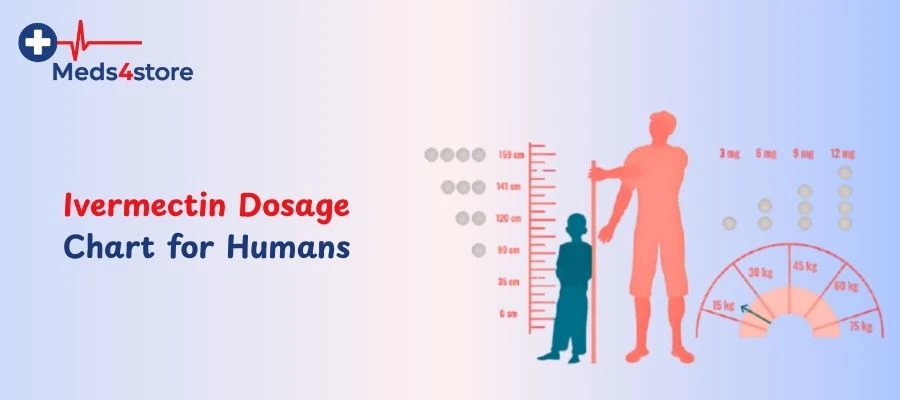
Ivermectin Dosage Chart for Humans
This chart provides the strongest recommended weight based dosages for strongyloidiasis and onchocerciasis as well as for pediatric patients.
| Body Weight | Dose for Strongyloidiasis (200 mcg/kg) | Dose for Onchocerciasis (150 mcg/kg) | Children (15 kg and above)* |
| 15–24 kg | 3 mg | 3 mg | 3 mg |
| 25–35 kg | 6 mg | 6 mg | 6 mg |
| 36–50 kg | 9 mg | 6 mg | 6–9 mg |
| 51–65 kg | 12 mg | 9 mg | As prescribed |
| 66–79 kg | 15 mg | 12 mg | As prescribed |
| 80 kg and above | 200 mcg/kg | 150 mcg/kg | As prescribed |
*Ivermectin is generally not recommended for children weighing less than 15 kg unless specifically directed by a healthcare provider.
Dosage for Strongyloidiasis
For Strongyloidiasis, which is an infection caused by the intestinal parasite Strongyloides stercoralis, the typical ivermectin dosage is 200 mcg/kg and is taken as a single dose.
In some cases, physicians may recommend repeated treatment based on the following:
- Severity of infection
- Follow-up test results
- Immune system status
Patients should complete all follow-up evaluations as recommended by their physician.
Ivermectin Dosage for Onchocerciasis
Onchocerciasis (river blindness) is caused by the parasitic infection of Onchocerca volvulus, for which ivermectin is typically dosed at 150 mcg/kg.
Treatment may need to be repeated every 6 to 12 months, unlike some other parasitic infections, because ivermectin primarily targets immature parasites and does not kill adult worms.
Constant checks by a healthcare professional can help assess the need for repeated doses.
Ivermectin Dosage for Children
While ivermectin can be prescribed, treatment for children is highly regulated. Typically, children need to weigh at least 15 kg, and treatment must be constantly assessed.
While most infections can change the proposed treatment, the prescribing staff need to be consulted to avoid off label treatment.
It is important to note that while there is a highly regulated process for prescribing ivermectin, the prescribing process is the same for children as it is adults.
Fast Fact: Ivermectin doses for children are based on a child’s weight and are prescribed only when deemed absolutely necessary.
How to Take Ivermectin Correctly
There are some tips that can help ensure the medication works.
- Take the medication exactly as prescribed.
- Swallow tablets with a full glass of water.
- Typically should be done on an empty stomach.
- If there are multiple doses, then the prescribed doses must not be missed.
- All scheduled follow-up appointments and tests must be completed.
- Dosing must not be altered for any reason without first consulting the physician.
Possible Side Effects
Most people tolerate ivermectin when used correctly, but some side effects may occur.
Possible side effects include:
- Dizziness
- Headache
- Nausea
- Diarrhea
- Fatigue
- Skin reactions
Symptoms of Severe allergic reaction text should Briefly explain all side effects.
Safety Precautions
Ivermectin must not be taken until all of the following have been completely discussed with your physician.
- Patients with liver disease
- Pregnant and breastfeeding women
- Immunocompromised patients
- Patients taking concurrent medication
- Children and the elderly
Notify your doctor about all your medications, supplements, and herbals as there may be potential interactions.
Conclusion
Ivermectin dosage charts for humans can be useful in educating patients about how and why dosing is determined for different types of parasitic infections for which ivermectin is used. Prescription of this medication is often done on a weight basis, for instance, treatment of strongyloidiasis and onchocerciasis. In certain cases, ivermectin may also be prescribed to children.
Since Ivermectin dosage is determined on an individual patient basis, medical supervision is required for the treatment with this medication. Following the prescribed dose, directions on how the medication is to be taken, and the scheduled follow-up visits helps in preventing the potential risks and getting the most out of the treatment.