
Ivermectin and Fenbendazole Parasite Treatment for Humans

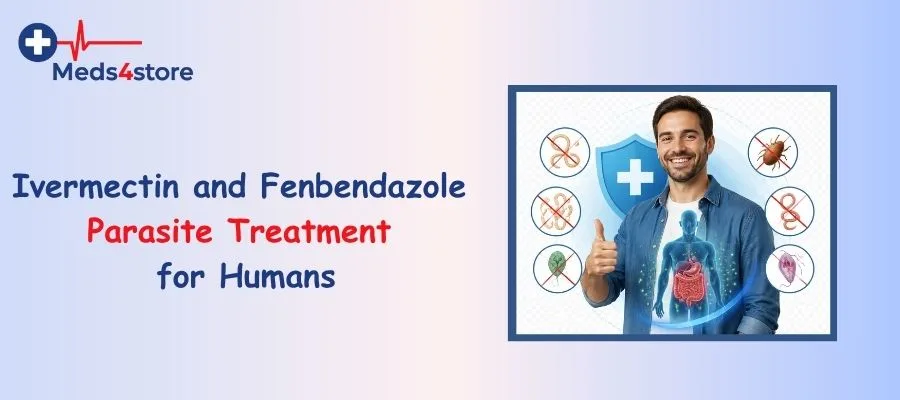
One of the most prevalent health issues around the world is parasite infection. Annually, there are millions of new cases. The World Health Organization (WHO) estimates more than 1.5 billion people have infections of soil-transmitted worms. This rising trend has led to increased interest in the development and research of new parasite treatments. Ivermectin and Fenbendazole are two antiparasitic medications that have recently received a lot of attention.
The two medicines differ in their mechanisms of action and body processes. Certain human parasitic infections can be treated by Ivermectin, which has approval by the FDA. Fenbendazole recently made headlines for its possible use in humans, as it is marketed for use in animals as a deworming agent. For proper and safe development of treatments, it is important to understand the mechanisms of these medicines.
Understanding Human Parasite Infections
The term ‘parasite’ refers to an organism that survives on a host. In people, parasites can infect the lungs, blood, muscles, the skin, and the digestive tract. The following are infections that require parasite treatment:
- Intestinal worms
- Roundworms
- Hookworms
- Strongyloidiasis
- Scabies
- River blindness (Onchocerciasis)
- Tapeworm infections
The severity and type of the parasite can lead to different symptoms. Common symptoms that lead individuals to seek parasite treatment include:
- Persistent fatigue
- Skin rashes
- Loss of appetite
- Cellular deficiencies
- Excessive bloating
- Persistent stomach pain
- Chronic diarrhea
Though many cases of parasitic infections found in people have been less prevalent due to new parasite treatments and better sanitation, there are millions of new cases each year. In the tropics and subtropics, they remain a major health concern.
Ivermectin for Parasite Treatment
Ivermectin is one of the most common medications for Parasite Treatment in humans. It is classified as an antiparasitic agent or an anthelmintic.
They may also prescribe Ivermectin for:
- Stronyloidosis
- Onchocerciasis (river blindness)
- Scabies
- Head Lice
Parasites are eliminated through the body as Ivermectin paralyzes and incapacitates their ability to function.
The type of infection and the person’s weight usually determines Ivermectin’s dosage. It usually requires one to take the medication with water and on an empty stomach.
Ivermectin is the drug that has been used the most in global health programs for the purposes of Parasite control campaigns. In areas of the world where river blindness and lymphatic filariasis are most prevalent, millions of doses are distributed every year. Recent reports in healthcare suggest that there is a high demand for the drug to be used as Parasite Treatment.
Fenbendazole for Parasite Treatment
Fenbendazole is another antiparasitic medication that is often mentioned in modern day parasite treatment. However, unlike Ivermectin, Fenbendazole is primarily approved for use in animals.
It is most commonly used in:
- Dogs
- Horses
- Goats
- Cattle
Fenbendazole may be used to treat:
- Roundworms
- Hookworms
- Lungworms
- Whipworms
- Some tapeworms
The medicine works by interfering with a parasite’s ability to transport nutrients and divide cells, which it does by altering a protein called Tubulin. This protein is critical for the parasite, because it also helps in the formation of microtubules.
Fenbendazole has gained a lot of popularity in alternative Parasite Treatment for its ability to cause these structures to collapse, which in turn, aids in the survival of the parasite.
Get Liver Detox – Milk Thistle and N-Acetyl Cysteine Now!
There is no FDA approval for human use of Fenbendazole for Parasite Treatment, even though it is a strong anti-parasitic treatment in veterinary practices. Human studies are scant, mostly being animal and in vitro studies.
Why Some People Take Ivermectin and Fenbendazole Together
The interest in using both Ivermectin and Fenbendazole together in online support groups is a growing trend as both are used for parasite treatment.
The interest is understandable as both target disparate ways of handling parasites.
- Ivermectin can target the nervous system of the parasite.
- Fenbendazole can target cellular and metabolic systems.
Because of the different ways of targeting parasites, some people believe that it can be a more robust Parasite Treatment.
Combination protocols have driven a lot of interest in:
- Resistant parasites
- Multiple parasites
- Chronic gut issues
- Extended parasite clearing
Currently, no medical guides allow for the combination of Ivermectin and Fenbendazole for Parasite Treatment.
Important Safety Considerations
Even though anti-parasitic medicines have been generally safe, improper treatment may carry significant health risks.
Ivermectin can have the following effects:
- Light-headedness
- Vomiting
- Loose Stool
- Rash
- Tiredness
- Fenbendazole can bring about:
- Abdominal pain
- Changes in liver enzymes
- Long-term exposure effects
People with liver issues, weak, and immune systems, and people on chronic medications have to be more careful than most Parasite Treatment.
It is advisable that women who are pregnant or lactating confirm with a doctor before utilizing anti-parasitic medicines.
Why Proper Diagnosis Matters
There are several parasitic symptoms and while some are digestive in nature, others can be due to an inflammatory response. Hence, accurate diagnosis is critical before the treatment of parasites.
Providers may suggest the following:
- Blood Testing
- Stool Testing
- Physical Assessment
- Diagnostic Imaging
With an accurate diagnosis potential, the following can be determined:
- The type of parasite
- Infection severity
- Appropriate medication
- Safe dosing strategy
Using the internet for self diagnosis can cause people to avoid seeking the appropriate medical attention.
Growing Interest in Modern Parasite Treatment
There has been an increasing number of searches for Ivermectin, Fenbendazole, and natural parasite cleanses over the past few years. Alternative Parasite Treatments posts for digestive health and management of parasitic infections continue to gain popularity on social media and in wellness.
Researchers are studying the effect of antiparasitic drugs on inflammation and on the pathways of metabolism and the immune system, among others. Several of these preliminary studies have produced interesting results and have generated a desire to research the potential of these drugs in areas beyond the scope of traditional antiparasitic treatments.
Though there are many discussions about parasite cleansing on the internet, medical professionals continue to recommend evidence-based Parasite Treatments and medical supervision.
Conclusion
The two most discussed drugs in the context of modern Parasite Treatments are Fenbendazole and Ivermectin. Ivermectin, an FDA-approved drug for the treatment of certain human parasitic infections, is a major player in global parasitic control.
While Fenbendazole is approved for veterinary use and is a highly effective dewormer, discussions related to its use for humans are considered to be experimental. Fenbendazole, along with Ivermectin, is one of the few options available to the public, and some people feel there is a need to combine drugs in order to provide a broader scope of treatment.
Since there is a risk of different parasitic infections, the safest route is medical supervision and a professional diagnosis before considering a parasite treatment of any kind.
Read also : Which Binder to Use With Ivermectin and Fenbendazole