
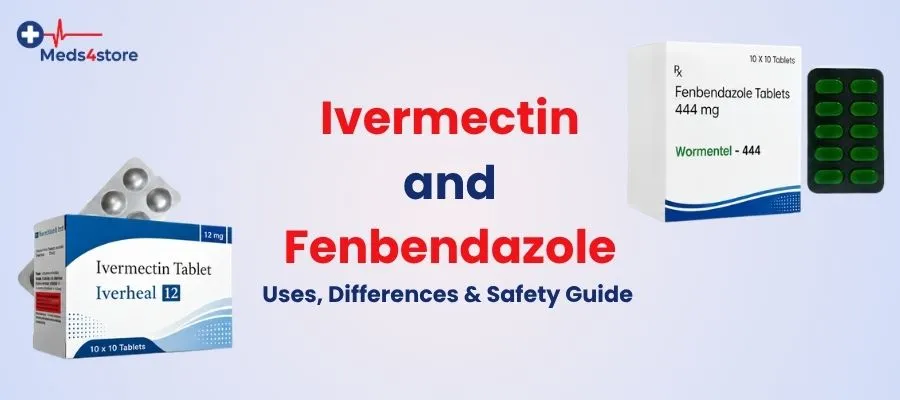
Ivermectin and Fenbendazole : Uses, Differences & Safety Guide

Ivermectin and Fenbendazole have gone viral as potential remedies for both parasite infection and cancer. They both kill parasites and people want to know how they stack up against one another as cancer cures.
WHO reported around 1.5 billion people on the planet are infected with parasites. Antiparasitic drugs are a prime consideration in the development of the healthcare infrastructure in many low- and middle-income countries. It is also imperative that we draw a line between completely novel uses and the uses they were approved for.
This guide will summarize Ivermectin and Fenbendazole, the FDA approved uses for them, side effects, dosing, and what we know about the drugs and cancer to date.
What Is Ivermectin?
Ivermectin is a prescription antiparasitic drug. It is approved for the treatment of a number of human parasitic diseases. It is an avermectin, and like others in the class, Ivermectin works by paralyzing and killing the parasite.
The FDA has approved Ivermectin for treatment of:
- Strongyloidiasis
- Onchocerciasis
- Scabies (in some instances)
- Head Lice (topically)
- Rosacea (topically)
Since it was created in the 1980s, Ivermectin has been a large component of many public health campaigns. From the 1980s to now, billions of doses have been given, and as a result, many tropical diseases have been removed as a disease of public health concern.
What Is Fenbendazole?
Fenbendazole is a benzimidazole antiparasitic that is largely used in veterinary medicine. Ivermectin and Fenbendazole is frequently given to treat intestinal helminths in the following animals:
- Dogs
- Cats
- Horses
- Cattle
- Sheep
Fenbendazole disrupts helminths’ glucose absorption mechanism and results in helminth death.
In contrast to Ivermectin, Fenbendazole is not used to treat human diseases due to its lack of approval by the FDA. Unlike Ivermectin, the use of Fenbendazole 222 in humans, due to large social media attention and anecdotal evidence, is far less controversial and more likely to be evidence based.
Ivermectin vs Fenbendazole
Both treat parasitic infections, but the differences are as follows:
| Feature | Ivermectin | Fenbendazole |
| Approved for humans | Yes | No (veterinary use) |
| Drug class | Avermectin | Benzimidazole |
| Primary use | Human parasitic infections | Animal parasitic infections |
| FDA-approved for cancer | No | No |
| Prescription required | Yes (human use) | Veterinary product |
Ivermectin has been extensively studied in humans, whereas Ivermectin and Fenbendazole has been studied in animals.
Uses of Ivermectin
Ivermectin has many FDA approved uses, some of which are:
- Onchocerciasis
- Stronglyoidiasis
- Parasitic skin infections
- Scabies
- Head lice (topical)
Ivermectin is being studied for many other potential medical uses; however, those are largely investigational.
The FDA recommends Ivermectin only be used for its approved medical indications or under the care of a qualified healthcare professional.
Uses of Fenbendazole
Fenbendazole is used in veterinary medicine to treat many parasites, some of which are:
- Roundworms
- Hookworms
- Whipworms
- Tapeworms
- Lungworms
Fenbendazole is frequently prescribed due to its broad spectrum of activity against many of the intestinal parasites of animals.
Investigations are ongoing to find out whether Ivermectin and Fenbendazole holds other biological functions beyond its ability to treat parasites. At what stage is this research? The use of Ivermectin with Fenbendazole has drawn up a lot of interest.
The mixing of Ivermectin and Fenbendazole is even suggested in several online forums, especially – in the name of science. For the time being, Ivermectin and Fenbendazole are neither approved for combination therapy nor designated for use in humans.
No significant medical organization like the FDA, the WHO, or the National Cancer Institute has an affirmative say on the combined use of Ivermectin and Fenbendazole.
It is important to note that taking medicines of any kind in combination on your own will most likely result in the following adverse effects.
- increased drug interaction
- increased stress on your liver
- increased Gastrointestinal side effects
- no long-term safety profile
Never use any combination of prescribed or veterinarian Ivermectin and Fenbendazole without consulting a medical practitioner.
Ivermectin and Fenbendazole for Cancer
The use of Ivermectin and Fenbendazole in Cancer treatment, is one of the most frequently searched queries.
Public research continues but it is essential to clearly differentiate laboratory findings from therapeutic treatments.
Ivermectin Research
It has been seen that Ivermectin and Fenbendazole holds the ability to affect cancer cells through the manipulation of some pathways on cells that govern growth and survival.
Reported investigations on the following have been seen.
- Breast cancer
- Ovarian cancer
- Leukemia
- Colorectal cancer
- Glioblastoma
Unfortunately the majority of these studies remain within the context of cell cultures or Animal studies on a larger scale. There is still a lack of research on Safety and Effectiveness of Ivermectin, Fenbendazole and the Cancer hypothesis for humans.
Fenbendazole Research
The popularity spiked for Fenbendazole too after some anecdotal evidence suggested it may have the ability to act against Cancer.
Research has been conducted into the possible effects of Ivermectin and Fenbendazole, including:
- Affecting the way in which cells undergo mitosis
- Affecting the formation of microtubules
- Affecting the metabolism of glucose within the cancer cells
Although some of the results from initial laboratory studies have observed positive results, Fenbendazole has yet to receive approval from the FDA as a cancer treatment, and there are insufficient data to support any claims in regard to human use.
There are ongoing studies conducted by a number of universities as well as cancer research centers to explore the repurposing of medications, including repurposing some anti-parasitic therapies. Until more clinical studies are conducted, no claims can be substantiated.
Ivermectin side Effects
Typically, the common adverse effects of this drug include:
- Dizziness
- Nausea
- Diarrhea
- Headache
- Tiredness
There may be serious adverse effects, such as allergic and even neurological effects, and these may be observed in certain specific parasitic infections.
Fenbendazole Side Effects
There is a lack of data to support the adverse effects in human subjects, as Fenbendazole is not authorized for human use.
Some of the reported adverse effects in animal subjects include:
- Vomiting
- Diarrhea
- Decreased appetite
- Lethargy
If you develop any new unreported adverse effects, you should contact a medical professional.
Dosage
Ivermectin Dosage
Ivermectin Dosage is dependent on all of the following:
- Weight
- Type of infection
- Age
- Condition
The dose of Ivermectin can be expressed in micrograms per kilogram (μg/kg), instead of giving a standard whole tablet.
Never self-administer or self-adjust your dose.
Fenbendazole Dosage
The dosing of Fenbendazole is dependent on:
- The species of animal
- Weight
- Type of infection
Because Fenbendazole is not approved for human use, there is no approved dose for human use.
Purchasing veterinary formulations for human use is not acceptable.
Where to Buy Ivermectin Online at Meds4Store?
If your prescribing health care professional has prescribed Ivermectin 12 mg Tablet, you are able to purchase it from a reputable online pharmacy, Meds4Store, who sell quality medications.
Ordering from Meds4Store has its advantages:
- Safe ordering online
- Better prices
- Better options for delivery
- Better availability
- Better support
You should always order prescription medications from verified pharmacies, and always use them according to your doctor’s orders.
FAQs
Is Ivermectin approved for humans?
Yes, Ivermectin is an approved medication by the FDA to treat parasitic infections in humans provided it is prescribed by a doctor.
Is Fenbendazole approved for human use?
No, Fenbendazole is a medication only approved for use in the treatment of diseases in animals by the FDA.
Is Fenbendazole effective against cancer?
No, there aren’t. As of today, there are no approved studies by the FDA to use either of these medications to treat cancer.
Conclusion
Ivermectin and Fenbendazole are antiparasitic medications. Ivermectin, unlike Fenbendazole, is approved for the treatment of human diseases by the FDA. Ivermectin also has an established safety profile. Fenbendazole is approved only for veterinary use and should not be used as a substitute for approved human treatments.
While the safety and efficacy of Ivermectin and Fenbendazole for other diseases like cancer is being researched, the evidence is limited to laboratory studies only. It is recommended to use other established and evidence based treatments. Always consult a healthcare professional before using Ivermectin, Fenbendazole, or any other medications off-label.
With a valid Ivermectin prescription, you can buy real medications from Meds4Store’s online pharmacy while promoting safe use of medications.